Picture this: you’re running late for class, shoes missing in one pile, textbooks wedged under last week’s laundry. Somehow, your tiny dorm shrinks even more every morning — and the search for your keys? That’s basically an Olympic sport now.
Living in a small college dorm isn’t just about squeezing everything in; it’s about dealing with chaos (and a little bit of daily panic). When every square foot counts, clutter multiplies fast. It eats up your time, messes with your mood, and makes everyday life way harder than it should be.
By the end of this guide, you’ll have a set of real-world, tested student dorm hacks organization tactics that actually work — not the usual advice you’ll find everywhere else. Get ready to reclaim your space and breathe easy, starting now.
Maximize Under-Bed Storage With Clever Solutions
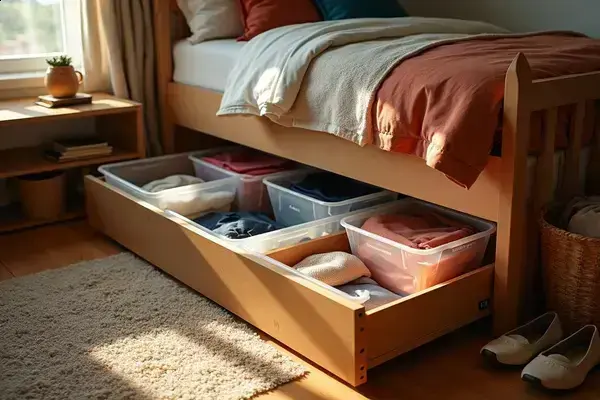
Ever tripped over a pile of shoes or wrestled with rogue backpacks under your bed? That awkward, wasted space is secretly prime real estate—if you know how to unlock it. Under-bed storage isn’t just a hack; it’s a survival skill when you’re sharing tight quarters and every inch counts.
💡 Pro Tip: Opt for rolling containers over static bins. According to The Container Store, units with low-profile wheels reduce lifting strain and make cleaning way quicker, especially in dust-prone dorms.
But what actually fits under there, and how do you keep it from turning into a messy abyss? Categories matter. Here’s a quick look at smart under-bed storage tools, what they’re great for, and a pitfall students overlook:
| Solution | Best For | Watch Out For |
|---|---|---|
| Rolling Storage Drawers | Bulky sweaters, shoes, seasonal gear | Check clearance—at least 7″ required |
| Vacuum-Sealed Bags | Extra bedding, out-of-season clothes | Don’t block vents or electrical outlets behind beds |
| Slide-out Baskets | Snacks, cleaning supplies, chargers | Skip if you’ll reach for items daily |
In practice: Sarah, a college sophomore, swears by clear rolling bins for her hoodie collection. She labels each one (winter, gym, off-season) and slides them side-by-side. Whenever swap-out season hits, finding what she needs takes twenty seconds—no wild digging required.
- Measure your bed clearance before you buy anything. Standard dorm beds allow 6-10″—but risers can give you extra lift if needed.
- Use hard-sided containers for electronics or supplies you don’t want squished.
- Store regularly used items near the bed’s edge, and rotate out off-season stuff to the far wall or headboard side.
How to Set Up Maximum Gain in 5 Steps
- Declutter first—don’t stash random junk “just because.”
- Pick storage with wheels or ergonomic handles for easy access.
- Sort by category: clothing, supplies, shoes, or snacks.
- Label each container. Color coding can help for quick grabs.
- Slide bins in with handles facing out for zero-fuss retrieval.
According to the National Association of Professional Organizers, the number one reason dorm storage fails is overcrowding—when you treat the space as a dumping ground, stuff always gets lost. Focus on intentional curation instead.
But there’s one detail most students completely overlook until it’s too late…
Make The Most Of Vertical Space In Tight Dorms
Ever looked up at your blank dorm walls and wondered, “How much space am I wasting?” Vertical storage is the unsung hero of tight living — and it’s easier (and cheaper) than adding square footage or extra furniture.
Here’s the thing: dorms rarely give you much floor to work with, but your walls, corners, and even closet doors are just sitting there, full of potential. What if you could double your usable storage—without making your room look cluttered?
💡 Pro Tip: Use adhesive, removable wall hooks or command strips for no-damage installation. The National Retail Federation notes rising student demand for rental-friendly solutions that maximize space while protecting surfaces.
Types of Vertical Storage Solutions at a Glance
| Option | Best Use | Easy to Move? |
|---|---|---|
| Over-the-Door Organizers | Shoes, toiletries, snacks | Yes |
| Wall-Mounted Shelves with Removable Adhesive | Books, decor, speaker | Yes |
| Stackable Cubes/Drawers | Folded clothes, extra supplies | Depends on model |
Picture this scenario: Beth’s cramped single came alive when she mounted several pegboards above her desk and bed using non-permanent hardware. Her art supplies, headphones, and class notes now hang within arm’s reach—plus, rearranging for exams or breaks takes five minutes instead of a full day.
- Choose modular shelving or stackable cubes so you can grow or shrink your system as your needs change through the semester.
- Don’t overload adhesive shelves—most handle up to 5 pounds, so use them for lightweight items only.
- Take advantage of back-of-door space for hanging organizers or even narrow racks (just avoid blocking the door’s swing path).
According to Good Housekeeping Institute, grouping items vertically by function (charging station, study zone, self-care caddy) cuts daily search time and makes cleanup less overwhelming.
And this is exactly where most people make the most common mistake…
Quick-Access Zones: Organize Essentials You Use Daily
Tired of digging through piles just to find your keys, ID, or phone charger? Here’s the ugly truth: when you’re in a rush, the struggle to find your daily essentials slows you down and blows up your stress.
That’s why you need what I call “quick-access zones.” These are dedicated landing spots (small trays, fabric caddies, pegboard hooks) strategically set up within arm’s reach from where you wake, work, and walk out the door. The National Association of Productivity and Organizing Professionals recommends this method — and for good reason.
- Corral all your must-grab items — wallet, keys, phone — into one tray or sectioned basket near your desk or door.
- Use a fabric bedside caddy for glasses, medication, and lip balm. It keeps things from slipping under the bed or getting forgotten.
- Hang a hook or magnetic strip right by the exit for headphones and ID badges.
- Block out a mini charging dock (or cable catch) so you’re not yanking cords off the floor every morning.
💡 Pro Tip: Don’t overload your quick-access zone. The whole point is eliminating decision fatigue — limit it to five, absolute-essentials only. Keep all else tucked away.
Setting Up Your Quick-Access Zone: A 5-Step Routine
- List your five most frequently used items.
- Designate a single, visible surface (tray, shelf, or pocket) for these items only.
- Place this zone wherever you transition the most — at your desk, door, or bed.
- Check it nightly. Refill, recharge, and prep for the next day.
- Remove anything you haven’t used all week.
In practice: Jordan, a nursing student, swears by his magnetic wall strip. He tosses up his ID badge and keeps a slim tray for his keys and Bluetooth earbuds. Missed alarms or dead chargers? Rarely happens now — because everything has a home that’s easy to see.
What actually works might surprise you…
Multipurpose Items That Save Space And Sanity
Do you ever wish one thing could do the job of three—without looking like a total dorm hack? In tight student quarters, multipurpose items are hands-down the smartest investment you’ll ever make. Here’s the thing: you don’t need more storage; you need smarter storage.
The truth is, the best space-savers are pieces that transform or stash away easily. The National Apartment Association singles out multifunctional furniture as a top recommendation for students facing limited square footage and tight budgets alike.
| Item | Main Use | Bonus Function |
|---|---|---|
| Folding Ottoman with Storage | Extra seat | Hides shoes, blankets, snacks |
| Adjustable Bed Tray Table | Laptop/Meal Surface | Stows flat under bed or doubles as nightstand |
| Hook-On Closet Organizer | Stack clothes | Sorts accessories, charges phone in built-in pocket |
💡 Pro Tip: Stick with neutral-toned multipurpose pieces. According to the American Society of Interior Designers, lighter colors make small rooms feel brighter and less crowded.
In practice: Alex, a grad student, rolled his portable ottoman from desk to bed to window, using it as a seat, a laptop stand, and finally as a late-night snack keeper—his closet hasn’t looked this tidy in months.
- Opt for collapsible furniture whenever possible; it tucks away when you need floorspace for guests or laundry sorting.
- Prioritize vertical over horizontal pieces—hanging organizers, tall shelves, and over-bed caddies create more usable space.
- Keep an eye out for products labeled “3-in-1” or “convertible” in campus stores and on major retail platforms for college living.
And honestly? This is exactly where most people make the most common mistake…
Declutter Smarter: Create A Sustainable Cleanup Routine
Why does your dorm feel chaotic again, even though you decluttered last month? The truth is, most student spaces fall back into mess mode because there’s no simple, repeatable routine in place. The secret isn’t one big purge—it’s lots of tiny, automatic cleanups.
Here’s a no-stress approach, designed for the realities of student life: quick, sustainable, and habit-based. According to the International OCD Foundation, routines that attach to existing habits—like tidying your desk after study sessions—are far more likely to stick.
💡 Pro Tip: Use a timer for 10-minute tidy-up sessions. Short, focused bursts are proven by the American Time Use Survey to be more effective (and less overwhelming) than marathon cleaning days.
Step-by-Step: Your Weekly Dorm Declutter
- Collapsible laundry basket
- Microfiber cloth
- Small trash bag
- Desktop organizer tray
- Sticky notes or dry-erase checklist
- Pick one day each week (set a reminder in your phone).
- Do a fast room scan—what’s lying out that shouldn’t be?
- Sort laundry into your basket; take it to the laundry room right after.
- Clear surfaces (desk, dresser) and wipe them down with your microfiber cloth.
- Empty the trash bag—even if it’s not full.
- Return all quick-grab essentials to their zone from earlier.
- Jot a to-do on your checklist if you run out of time or spot a problem that needs attention later.
In practice: Jamie sets a Sunday night timer. Just ten minutes, always after dinner—no exceptions. She sprints through her room with the basket and a damp towel, lines up her phone and keys in the tray, and tosses stray trash. Guess what? Her Monday mornings start calm, and her roommates have even joined in.
The right habits in place now make everything easier from here.
Your Dorm, Finally Under Control
If you take just one thing from this guide, let it be: student dorm hacks organization is about working with your space, not against it. Maximize what you have, keep quick-access zones, choose multipurpose gear, and stick with a simple weekly routine—small changes make big results.
Maybe your dorm felt cramped, chaotic, or like a never-ending hunt for headphones every morning. Things don’t have to stay that way. Now you’ve got smarter storage solutions, routines you’ll actually use, and real tools to keep the chaos in check. Your space can finally feel like your own—organized, calm, and 100% you.
Which dorm hack will you try first—under-bed storage, quick-access zones, or a new cleanup habit? Share your favorite (or your biggest dorm struggle) in the comments. Let’s help each other out!

Alex Jordan Bennett is a student success enthusiast and academic planning writer dedicated to helping college students stay organized, manage their time, and build the habits they need to thrive. With a passion for practical study systems, campus life guides, and career preparation tools, Alex built this blog to give every student the practical resources they need to succeed from freshman year through graduation and beyond.