Picture this: it’s move-in day, and you’re staring at a mountain of boxes in a room the size of a generous walk-in closet — where will it all even go? That sinking feeling isn’t just you. Dorm rooms have a reputation for making you second-guess every single item you own.
The problem goes way beyond a few scattered socks. Cramming your whole life into a tiny, unpredictable space can make you feel more stressed and less at home — like you’re just visiting, never really settling in. And if you ignore the mess, chaos takes over fast (trust me, it’s no fun looking for headphones under a pile of laundry with a paper due in an hour).
By the end of this article, you’ll know dorm room organization ideas tips that genuinely work, letting you reclaim space, sanity, and a bit of control. Ready to ditch that overwhelmed feeling? Let’s set you up for a semester where your room finally feels like yours.
Why Dorm Rooms Feel Cluttered And What Really Gets In The Way
Ever look around your dorm and feel like the walls are closing in a little more every day? There’s a reason clutter creeps up on you faster here than anywhere else. College dorms are tight, and every object—from winter boots to textbooks—seems to multiply overnight.
But why does clutter always seem worse in a dorm setting? The answer isn’t just “small room syndrome.” Often, it’s the design itself: minimal built-in storage, shared living spaces, restrictive furniture, and those oddly-shaped closets. And then there’s the classic college “just pile it” habit, which makes it easy for laundry and snacks to take over your space.
💡 Pro Tip: According to The Container Store and studies by the National Association of Productivity & Organizing Professionals, vertical storage and multi-use organizers can double your usable area without feeling overcrowded.
In practice: Imagine dropping your backpack on the floor right after class, kicking off your shoes, and tossing your hoodie on the desk chair. You think, “I’ll clean up later”—but tomorrow, that pile’s twice as big. It’s not laziness; it’s the domino effect of small space living, especially when your daily routines outpace your organizing system.
- Hidden obstacles: Dorm layouts rarely allow for large storage items, so bins and boxes pile up in full view.
- Shared chaos: If you have a roommate, double the stuff doesn’t mean double the space. It means negotiating every inch, every day.
- Sentimental clutter: It’s tough letting go of gifts, awards, or memorabilia—even though they often end up as permanent dwellers in your already packed room.
| Clutter Culprit | Impact on Space | How to Spot It |
|---|---|---|
| Overflow of Clothes | Eats up closet and chair space | Piles build up on every flat surface |
| Random Paperwork | Makes desks unusable | Loose notes, flyers, receipts scattered around |
| Food & Snack Storage | Introduces odors and pests | Bags of snacks behind beds and in drawers |
Here’s the thing: just “getting rid of stuff” isn’t a real solution if you don’t address the roadblocks that keep clutter coming back. It’s about creating systems that work with your routines—not against them.
But there’s one detail most students completely overlook until it’s too late…
How To Make The Most Of Awkward Nooks And Tight Spaces
Staring at that odd corner or the gap between your bed and the wall, you might wonder, “Is there any way to actually use these weird little spaces?” The answer is yes — and once you reframe the problem, those nooks become valuable real estate.
Making the most of awkward spots isn’t about buying more stuff. Instead, it’s about smart functional design and flexible storage. The National Association of Home Builders often highlights how unused corners and vertical space are the most overlooked assets in any small living area, especially in student housing.
- Over-the-door organizers: Hang one on the back of your closet or bathroom door. Perfect for shoes, snacks, or even tech chargers.
- L-shaped shelves: These fit snugly in corners above desks or beds, turning dead air into display space or a practical bookshelf.
- Rolling carts: Slim-profile rolling carts (IKEA’s RÅSKOG is a great example) slide into gaps between furniture, creating mobile stations for study supplies or cleaning products.
💡 Pro Tip: If you’re short on floor area, remember that both IKEA and The Container Store endorse clear vertical stacking bins. See-through bins let you find what you need—and measure exactly how much space you’re reclaiming.
- Spot awkward spaces: Check behind doors, under bunk beds, in corners, and even under your desk for underused areas.
- Measure every surface: Length, width, height — you’ll avoid wasted purchases and frustration later.
- Pick storage that matches the space: Think tall and narrow for vertical gaps, shallow bins for under-bed storage, or corner shelves for angled walls.
- Organize by use: Daily items up front, seasonal stuff tucked further back — that way, you’re not fighting with the storage just to find a winter hat in July.
- Label everything: Clear bins work best, but labels beat mystery hunting any day. If you’re sharing with a roommate, color-coded labels help keep the peace.
Picture this scenario: You finally put a two-tier shelf in the corner by your desk, stacking textbooks on the bottom and snacks on top. Suddenly, the two foot-wide area that was always empty is now pulling double duty—and your actual desktop stays clear for studying.
| Storage Solution | Best For | Downside |
|---|---|---|
| Rolling Carts | Gaps between furniture | May collect dust underneath |
| L-Shaped Corner Shelf | Unused upper corners | Requires wall mounting |
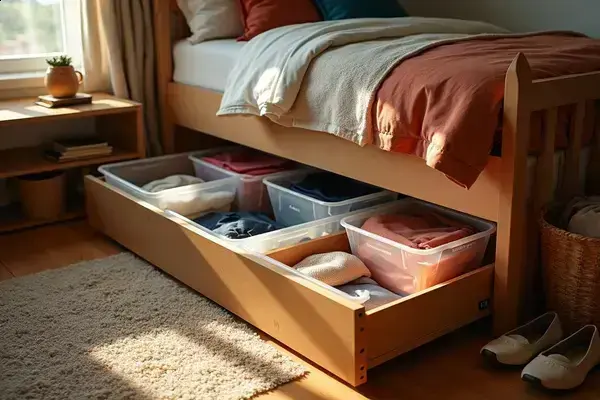
| Under-bed Drawers | Storing off-season items | Needs a bed with clearance |
And this is exactly where most people make the most common mistake…
Smart Storage Tricks You Can Actually Stick With
Ever try an organizing hack only to abandon it after a week? You’re not alone. The trick isn’t chasing the latest storage trend — it’s building habits and choosing options you’ll actually use daily.
Consistency wins over complexity in a dorm room. Think simple, repeatable systems. The International Association of Professional Organizers regularly recommends transparent storage, modular cubes, and daily reset routines because they’re proven to last beyond those first few weeks on campus.
- See-through bins: You spot what you need without digging. Ideal for snacks, toiletries, and stationery.
- Magnetic hooks and wall grids: Mount them on metal surfaces or cinderblock walls for keys, headphones, and jewelry. They’re renter-friendly, too.
- Bedside caddies: Slip them under your mattress for books, chargers, or whatever you grab every night.
💡 Pro Tip: Set up a weekly five-minute reset. The National Association of Productivity & Organizing Professionals says that even a super-short tidy-up locks in bigger gains over the semester.
- Pick one main storage system per type of item — one for clothes, one for schoolwork, one for daily essentials.
- Label each bin or drawer, clearly, so there’s never a mystery pile-up.
- Place frequently-used items within arm’s reach (no climbing or crawling every time).
- Store seasonal or rarely-used stuff on upper shelves or under the bed — out of your way, out of your mind.
- Commit to a quick reset at the same time each week to keep everything under control.
In practice: You toss your backpack into a labeled cubby every time you walk in, toss dirty clothes straight into a skinny hamper, and — miracle of miracles! — nothing disappears for weeks at a time.
| Trick | Effort to Maintain | Who Will Love It |
|---|---|---|
| Clear bins with labels | Very low | Visual organizers, quick sorters |
| Wall-mounted magnetic grid | Low | Tech-lovers, minimalists |
| Bedside caddy | Zero (set and forget) | Night readers, phone chargers |
What actually works might surprise you…
Decor Hacks That Look Good And Keep You Sane
Ever feel like dorm decor is either all “Pinterest-perfect” or just plain clutter? The truth is, the best decor is about more than looks — it makes your space work better for you.
Instead of covering every inch with posters or random trinkets, focus on high-impact items that help you stay organized. According to the Council for Interior Design Accreditation, a harmonious room layout reduces stress and improves cognitive focus, especially in compact living environments like dorms.
- Removable wall decals: These peel-and-stick designs add color or personality, but remove cleanly (no residue, no fines).
- Multi-use seating: Storage ottomans double as a place to stash extra bedding or snacks, and provide a comfy seat for guests.
- Cork or felt pinboards: Pin up reminders, photos, or timetables — way more stylish (and useful) than paper taped to a wall.
💡 Pro Tip: Keep your color palette limited to two or three hues. Studies from the Color Marketing Group show that coordinated colors make small spaces feel less chaotic, tricking the eye into seeing more space than you actually have.
Picture this scenario: Your wall features a navy-and-gold removable decal, a recycled felt pinboard hangs above your desk, and a textured gray ottoman holds everything from slippers to textbooks. Not only does your room feel instantly put together — you also know exactly where to find what you need, even on those wild mornings.
| Decor Item | Function | Major Perk |
|---|---|---|
| Removable Decals | Add style to walls | No-damage, easy removal |
| Storage Ottoman | Hide clutter, extra seating | Works for sleepovers and quick storage |
| Pinboard | Organize schedules or display photos | Boosts focus, keeps paper visible |
And this is exactly where most people make the most common mistake…
How To Keep It All Organized When Life Gets Hectic
How many times have you started the week super organized, only to watch chaos slowly reclaim your desk by Friday? The real test isn’t getting organized — it’s staying organized, even when classes, clubs, and social life collide.
- Start with a Daily Reset: Every night, spend just five minutes returning things to their places. Clothes in bins, chargers in caddies, snacks back in their box. It adds up fast.
- Build Habits — Not Just Routines: Focus on one thing at a time. Try making your bed every morning or clearing your workspace before sleep. Consistency turns effort into autopilot.
- Use a Visual Reminder System: Pinboards or sticky notes keep deadlines, meal plans, and events where you’ll actually see them — no more surprises.
- Plan Weekly Deep-Cleans: Set a timer every Sunday for 15 minutes. Tackle laundry, wipe down counters, empty the fridge, and cycle out clutter.
- Share Systems with Roommates: Agree on who does what, when. Color-code or label shared items to stop the “who owns this?” drama before it starts.
💡 Pro Tip: The American College Health Association recommends environmental check-ins as part of their self-care guidelines. Take 60 seconds to scan your space; tidiness helps reduce stress and keeps distractions in check.
In practice: Picture this scenario — it’s finals week, your to-do list is a mile long, and you’re running on caffeine. Instead of searching under piles for a textbook, you find it instantly because you’ve stuck to your five-minute nightly reset. That tiny investment pays off big when your brain’s already juggling enough.
- Set an alert on your phone as a gentle reminder to tidy each night.
- Keep a slotted mail organizer for assignments and urgent papers so nothing vanishes.
| Strategy | Time Needed | Ideal For |
|---|---|---|
| Nightly Reset | 5 min | Anyone with a busy schedule |
| Weekly Deep Clean | 15 min | People who work better on weekends |
| Shared Systems | Variable | Roommates, suite-mates |
The right habits in place now make everything easier from here.
Your Space, Finally Under Control
If you take just one thing from this guide, let it be: real dorm room organization happens when you use simple systems that fit your life, not just your stuff. Finding smart storage, using every nook, and choosing decor that actually helps you stay calm will turn chaos into comfort. That’s how dorm room organization ideas tips go from Pinterest to reality.
Maybe before, your room felt cramped and stressful. Now it can feel roomy, even on your busiest days. A few consistent habits, a dash of creativity, and those messy corners are no match for you anymore. You’re about to enjoy more space—without tossing what matters most.
Which organization hack or design idea are you most excited to try in your dorm? Share in the comments and swap stories with others tackling the same small-space puzzle!

Alex Jordan Bennett is a student success enthusiast and academic planning writer dedicated to helping college students stay organized, manage their time, and build the habits they need to thrive. With a passion for practical study systems, campus life guides, and career preparation tools, Alex built this blog to give every student the practical resources they need to succeed from freshman year through graduation and beyond.