Your palms are sweaty, textbooks are everywhere, and the clock seems to move twice as fast the night before a big exam. Sound familiar? If so, you’re definitely not the only one—cramming and panicking right before a test is practically a modern student rite of passage.
Cramming isn’t just rough on your nerves—it rarely pays off. You end up tired, frazzled, and second-guessing everything you thought you knew. Honestly? Most people know this, but without a real plan, it’s easy to fall right back into old habits.
By the time you finish reading, you’ll have a proven method and a exam preparation checklist printable you can actually use—so you won’t just study, you’ll walk in ready and confident. Ready to break the cycle for good? Let’s dig into what really works.
Why Most Study Routines Fail When It Matters Most
Ever wonder why your carefully planned study routine crumbles when crunch time hits? You’re not alone—it’s a pattern even the smartest students face. The truth is: a beautifully designed schedule means nothing if it falls apart at the very moment you need it most.
Lack of flexibility, unrealistic goals, and sheer overwhelm? That’s the real culprit. Rigid plans buckle under the weight of unexpected tasks, last-minute assignments, or a subject that’s harder than you thought. According to the American Psychological Association, over 60% of students admit their study routine goes off track the week before exams, opening the door to stress-fueled cramming and lost sleep.
💡 Pro Tip: Build in “buffer zones”—flexible study blocks that you can move on your calendar if life throws a curveball. Research from Stanford University shows students who plan for interruptions actually get more done over time.
In practice: picture this scenario—Jenna mapped out every hour of her final exam week in a color-coded planner. It looked perfect on paper. Then her math review ran twice as long, she caught a cold, and her routine collapsed. One skipped day turned into three, and suddenly she was desperately re-reading her notes at 2 AM before the test. Sound familiar?
- No built-in room for error? One hiccup derails progress.
- Unrealistic daily targets? Quickly become demotivating instead of uplifting.
- Ignoring mental fatigue? Leads to brain fog and burnout far before exam day.
| Routine Trap | Short-Term Impact | Long-Term Consequence |
|---|---|---|
| Skipping breaks | Quick energy dip | Reduced memory & motivation |
| Overloading a single subject | Content fatigue | Poor retention across topics |
| All-nighter cramming | Temporary boost | Shallow, fragile recall |
But here’s the kicker—most people only realize these traps in hindsight, not in time to fix them. What actually works might surprise you…
Science-Backed Strategies To Boost Retention And Focus
Ever felt your mind drift just when you need to lock in for serious study? Science says you’re not just being lazy—your brain actually needs structure to retain new info and stay focused. The right study approach, guided by evidence, can dramatically change your results.
Here’s the thing: memory isn’t about brute force, it’s about timing, rhythm, and the way you revisit material. The Pomodoro Technique—created by Francesco Cirillo—splits your study sessions into 25-minute bursts, followed by a five-minute break. According to a University of Illinois study, this cycle keeps your attention sharp and actually prevents the mental fatigue that leads to burnout.
💡 Pro Tip: Use spaced repetition with flashcards for long-term memory gains. According to the National Institutes of Health, reviewing topics just before you’re about to forget them creates strong, lasting connections in your brain.
- Set a Clear Goal: Define what you’ll conquer (one textbook chapter, key formulas, flashcard deck). Specificity cuts overwhelm.
- Break Into Chunks: Tackle material in bite-sized sections—studies from Carnegie Mellon show this boosts recall and confidence.
- Pomodoro Sessions: Work for 25 minutes, then take a 5-minute break. Repeat up to four times.
- Spaced Review: Schedule your next session for the same topic a day (or several days) later—don’t rely on one marathon session alone.
- Active Recall: Test yourself, don’t just reread. Cover up answers and explain concepts out loud. Retrieval trumps repetition.
In practice: picture this scenario—a college student named Lauren swaps her old three-hour cramming block for four Pomodoros and daily flashcard reviews. She’s memorizing complex biology terms faster, and her quiz scores climb (not just her anxiety!).
- Mental fatigue drops.
- Focus rebounds with every break.
- Review sessions feel manageable, not endless.
What actually works might surprise you…
How To Build Your Personalized Checklist For Exam Prep
Wondering how to create a study checklist that doesn’t just sit unused at the bottom of your backpack? Here’s the thing: a personalized checklist works because it’s designed for your habits—not someone else’s highlight reel. When you tailor it to your real exam schedule, subjects, and weak spots, your study plan becomes more than a wish list—it’s your daily accountability partner.
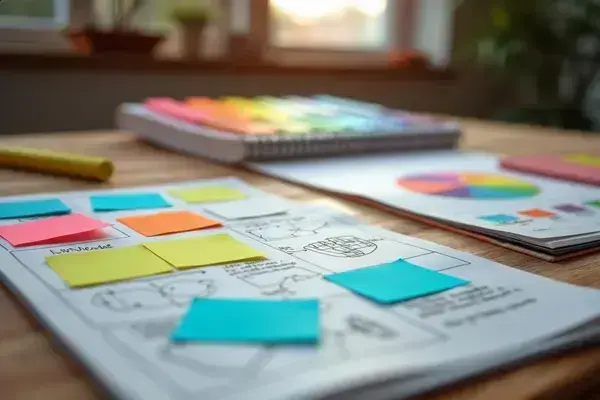
- Required items: one sturdy notebook or printable template, colored markers or highlighters, post-its, and access to your exam dates & syllabus.
- Gather Your Materials: Pull together all syllabi, assignment lists, and official test dates—the details matter more than you think.
- Break Down Each Subject: List every topic, chapter, or concept you know will be tested. Don’t just write “study math”—be specific, like “geometry proofs, quadratic equations.”
- Set Realistic Deadlines: Use your calendar to decide when each section needs tackling. Aim to finish tough topics early, giving extra days for review and emergencies.
- Prioritize Trouble Spots: Mark with a star or different color anything you usually struggle with—extra time and resources should go here first.
- Choose Your Format: Decide if you want a paper checklist, a digital to-do in an app like Todoist (from Doist Ltd.), or a printable planner you hang where you’ll see it every morning.
- Schedule Review Sessions: Block out time for self-quizzing, flashcards, or peer study for each subject, spreading them evenly over the weeks.
⚠️ Important Warning: Don’t cut corners on review time. The College Board recommends at least three spaced-out reviews for each major test section—cramming the night before nearly always backfires.
In practice: picture this scenario—Jordan, a high school senior, creates a checklist broken into daily, weekly, and last-minute priorities. She checks off “chemistry formulas” and “English essays” one by one, with colored dots flagging what needs her most focus. A simple, visual system keeps stress in check because nothing falls through the cracks.
| Checklist Item | Priority | Due Date |
|---|---|---|
| Geometry Proofs | High | April 15 |
| Biology Diagrams | Medium | April 17 |
| Essay Draft | High | April 14 |
And this is exactly where most people make the most common mistake…
What To Include (And What To Skip) In Your Study Plan
How do you decide what goes into your study plan and what quietly gets left out? The smartest students don’t just add everything—they curate. Here’s the truth: overload leads straight to overwhelm. A focused plan, on the other hand, protects your energy and helps you hit the material that really matters most.
- Must-Include: Topics outlined on your syllabus, major concepts flagged by your teacher, and types of questions that appeared on previous exams. Don’t forget self-testing and spaced review days either—they’re proven by the Association for Psychological Science to deliver deep, retrievable learning.
- Consider Skipping: Overly detailed notes on subjects you already know cold, entire chapters never emphasized in class, and low-point homework assignments that won’t help your score.
- Gray Area: Supplementary readings or bonus projects. If your core material is memorized and you’ve still got time, dip in for mastery or enrichment.
💡 Pro Tip: Color-code or highlight your checklist: green for must-do, orange for optional, and gray for “skip or save for last.” This visual cue, recommended by Learning Scientists.org, saves you panic-scanning your plan at midnight.
In practice: picture this scenario—Miguel is prepping for finals and sees five chapters for chemistry on the syllabus, but only three consistently came up in class notes and review quizzes. He focuses his checklist on these three, marks the others as “bonus if time,” and earns an 85 instead of spinning his wheels across every possible topic.
| Checklist Item | Include? | Reason |
|---|---|---|
| Past test question types | Yes | High likelihood on actual exam |
| Optional homework problems | No | Time better used elsewhere |
| All textbook chapters | If time allows | Only after core concepts mastered |
And this is exactly where most people make the most common mistake…
Download And Use The Ultimate Exam Preparation Checklist
If you’ve ever stared at a pile of notes and thought, “Where do I even start?”—you’re not alone. The solution? An exam preparation checklist you can trust and tweak for any subject. Here’s the truth: the right printable doesn’t just reduce stress, it completely changes your mindset from frantic to focused.
- What’s inside: The Ultimate Exam Preparation Checklist covers every phase—goal setting, topic breakdown, review sessions, self-testing spots, mental health breaks, and even space for last-minute “panic checks.”
- How to use it: Print or download the checklist, then fill in deadlines for each section based on your real exam dates. Tape it to your wall, keep a copy in your planner, or load it digitally into a productivity app like Notion from Notion Labs Inc. for easy updating.
- How often to update: Mark off tasks daily or after each study block. Review and adjust the checklist at least twice a week—especially after mock tests or review classes.
💡 Pro Tip: Personalize your checklist with recurring reminders for breaks and self-check quizzes. The International Society for Technology in Education recommends small, frequent rewards for milestone check-offs—they keep motivation high.
In practice: picture this scenario—Amina, juggling two AP classes and sports, prints the checklist and hangs it above her desk. She uses neon stickers to mark major milestones and a digital copy on her tablet to shift deadlines when things get busy. No more wondering what she missed—just simple, visual progress and a few celebratory checkmarks along the way.
| Section | Action | How Often |
|---|---|---|
| Topic Review | Mark as complete | Daily |
| Self-Test | Add results/areas to revisit | After each test |
| Mental Breaks | Check in for 10 min | Every study block |
Once this is in place, the rest of the routine falls into place naturally.
Your Exam Stress Ends Here
If you take just one thing from this exam preparation checklist printable guide, let it be: you don’t need to cram or panic when you have the right plan. Build a checklist around science-backed strategies, focus on what matters, and use simple tools to stay organized—those are the real game changers.
Before, studying left you stressed and unsure. Now you know which steps to follow, which topics deserve your time, and how to track your progress (with plenty of reminders for breaks). You’re not guessing anymore—you’re in control. And honestly? That’s the difference between feeling lost and actually being ready on test day.
Which piece of this checklist are you most excited to try first—or do you already have a secret exam prep ritual? Share it below in the comments—we’d love to hear how you make studying work for you!

Alex Jordan Bennett is a student success enthusiast and academic planning writer dedicated to helping college students stay organized, manage their time, and build the habits they need to thrive. With a passion for practical study systems, campus life guides, and career preparation tools, Alex built this blog to give every student the practical resources they need to succeed from freshman year through graduation and beyond.