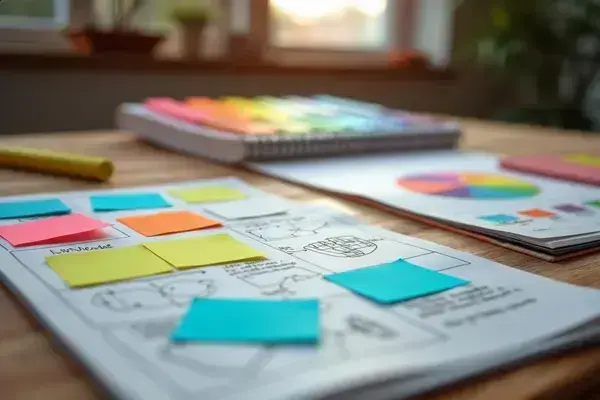
Ever found yourself re-reading your messy notes, only to wonder what you wrote — or worse, why you wasted the time in the first place? It’s not just you. Lots of us start with big plans for organized notes but end up lost in a jungle of scattered pages, half-finished lists, sticky notes that go missing, or digital files we’ll never actually look at again. The headaches (and missed opportunities) add up fast.
Here’s the thing: taking good notes isn’t just about writing stuff down. When you don’t have a strategy that fits the way your brain works, important info slips through the cracks. You end up stressed out and scrambling, hoping you remembered everything for class, work, or just daily life. It’s draining!
By the end of this article, you’ll have a toolbox of the very best note taking guide methods printable and ready-to-use templates tailored for real life — not just theory. Every method is explained in human terms, with practical tips you can use immediately. Ready to finally make note taking actually work for you? Let’s get started right below.
Why Traditional Note Taking Fails (And What To Do Instead)
Ever spent an hour scribbling notes, only to look back and realize you remember… almost nothing? You’re not alone. The truth is: most traditional note taking simply doesn’t match how actual memory works — or how real brains process information under pressure.
Traditional approaches, like the classic ‘write everything the teacher says’ or ‘summarize every paragraph from the textbook,’ seem logical at first. But here’s what research from the Learning Scientists at Washington University shows: transcribing and copying, without intention, makes it far harder to recall details later. You end up with pages of passive records, instead of mental anchors you can really trust.
Picture this scenario: Jenna attends a week-long professional training. Her notebook is packed with sentences — but none are highlighted, categorized, or tied to key actions. Two weeks later, she’s hunting for a simple answer and all those sentences blur together. The cost? Lost time, frustration, and missing her performance review goal.
- Copying without engaging leads to shallow understanding.
- Linear notes make it hard to spot patterns or relationships.
- Overloading with detail creates noise that distracts from what’s actually crucial.
⚠️ Important Warning: According to the American Psychological Association, notes that lack structure and reflection reduce learning efficiency by up to 40% — especially for complex topics that build over time.
So, what actually makes the difference? Shifting from passive to active techniques: organizing info visually (like mapping or color-coding), using cues and triggers, and consciously connecting new facts to what you already know.
| Traditional Method | Why It Fails | What Works Instead |
|---|---|---|
| Linear Outlining | Hard to review quickly; little visual cueing | Use mind maps or two-column Cornell format |
| Verbatim Transcription | No connection to existing knowledge | Summarize in your own words as you go |
| No Highlighting | Everything looks equally important | Mark key points with colors or symbols |
In practice: your note system should help you remember, act, and review faster — not just record for the sake of it. But there’s one detail most note takers completely overlook until it’s too late…
Choosing The Note Taking Method That Matches Your Brain
Why do some people thrive with color-coded charts, while others swear by quick bullet points on a plain page? The answer: brains are wired differently. The best note taking method for you connects directly to your thinking style—so you’ll actually use it.
Here’s the thing: picking a random technique because it’s popular won’t stick for long. According to a Stanford University study, personalizing note taking (matching process to preference) increases retention by more than 30%. The trick isn’t to force yourself into a rigid system, but to tune into how your mind organizes info naturally.
💡 Pro Tip: Take the VARK assessment (Visual, Auditory, Read/Write, Kinesthetic) to identify your dominant learning style—then test at least two note taking formats that play to your strengths.
- Visual Learners: Prefer diagrams, maps, color, and spacing.
- Auditory Learners: Retain info best when paraphrased or summarized aloud.
- Read/Write Learners: Gravitate toward linear outlines, text-heavy notes, and lists.
- Kinesthetic Learners: Remember through hands-on actions—sketching, highlighting, or manipulating cards/slides.
| Method | Best For | Key Benefit |
|---|---|---|
| Mind Mapping | Visual Thinkers | Easy to spot connections |
| Cornell Notes | Read/Write | Organized for review & recall |
| Audio Summaries | Auditory | Boosts memory via repetition |
In practice: picture someone who struggles to find notes fast before a meeting. If they’re a visual thinker stuck using classic outlines, chaos follows. But switch to mind maps? Suddenly, info leaps off the page—patterns and main points pop instantly.
Ready to find a method you’ll actually stick with? What actually works might surprise you…
How To Set Up Your Perfect Note Taking System Step By Step
Ever tried to organize your notes, only to give up because the system felt clunky or just didn’t fit how you work? Building a note taking system that actually works for you isn’t magic—it’s about small, thoughtful steps and a bit of trial and error.
- Pick Your Note Medium: Choose paper, digital, or a hybrid. Consider if you like the feel of a notebook, or if searchability is a must-have.
- Gather Your Essentials:
- Notebook or note app (e.g. Notion, Evernote)
- Dividers or tags
- Highlighters or digital color-coding
- Sticky flags or digital bookmarks
- Define Your Capture Rules: Decide what makes it into your notes—just takeaways, action items, or detailed flow? Keeping a consistent structure beats overwhelming “catch-all” pages every time.
- Set Up Categories: Create broad sections for each subject, project, or context. For digital, use folders and tags. For paper, section your notebook with tabs or colored dividers.
- Design Your Weekly Review Ritual: Block 10 minutes weekly to skim, highlight action items, and transfer key info. The Learning Scientists recommend regular reviews as the #1 effectiveness boost.
In practice: imagine Sam, who constantly forgets what was covered in meetings. After he creates a digital note template with sections for agenda, action items, and summaries, everything starts to click. His follow-ups are faster, stress drops, and he finally feels on top of things.
💡 Pro Tip: Keep your system flexible! If you notice something feels slow or confusing, tweak one element at a time—don’t tear the whole thing down. Adapt, don’t abandon.
Want one more layer? Add smart organization tools—a dedicated action item column, recurring reminders, or syncing across cloud platforms. According to the International Society for Technology in Education, layered organization increases long-term retention and recall. And this is exactly where most people make the most common mistake…
Printable Note Taking Templates You Can Start Using Today
Looking for structure that finally sticks? Printable note taking templates are the secret weapon of top students, busy professionals, and anyone tired of hunting through messy pages. They’re designed to make your process smoother from the very first page.
- Cornell Template: Features two columns—cue/questions and notes—with a summary box at the bottom. Perfect for lectures, meetings, or podcasts.
- Mind Map Starter: Blank with a central circle and radiating branches. Great for brainstorming, project planning, or big-picture reviews.
- Weekly Action Sheet: Divided into days, priorities, and action steps. Keeps you accountable for habits and follow-ups.
Each of these printable templates gives you a head start instead of a blank stare. Choose the one that matches your session, print a stack, and keep them handy in your favorite folder or binder.
| Template | Ideal For | How To Use |
|---|---|---|
| Cornell Notes | Analytical learners | Fill cues as you listen, summarize at the end |
| Mind Map | Creative sessions | Start from the center, branch ideas outward |
| Action Sheet | Task management | Write goals in the margin, track each day |
💡 Pro Tip: Print double-sided to save space and keep a set of blank templates ready in your bag. According to the National Learning Tools Association, accessible templates cut wasted time by 25% and improve consistency for both students and professionals.
In practice: imagine Alex prepping for finals. One binder tabbed with three template types—review questions, big-picture maps, task trackers—means every kind of note has its place (and purpose). Fewer distractions, faster review, less stress.
But what actually makes these notes memorable and easy to recall? That’s all about what you do after the class ends…
Tips To Make Your Notes Actually Stick (And Save You Time)
Ever wondered why some notes are forgettable, while others practically burn into your brain? Here’s the thing: it isn’t about writing more words—it’s about how you interact with them later. Active, structured review turns “just another page” into a memory superpower.
- Summarize in Your Own Words: Resist the urge to copy verbatim. For every major section, add a one-sentence takeaway in your language—forces your brain to process and retain.
- Use Spaced Repetition: Review briefly after 1 day, then again after a week. According to the University of Oxford Centre for Evidence-Based Medicine, this technique doubles your long-term retention compared to cramming.
- Highlight Action Items: Mark tasks or next steps with a specific symbol, like a star or colored box. This way, you don’t waste time hunting for what’s actionable later.
- Sync Across Devices: If you’re digital, use an app like Notion or OneNote to keep notes accessible (and searchable) everywhere.
💡 Pro Tip: Combine two sensory triggers—like reading notes out loud or turning summaries into mini diagrams—for more powerful recall. The National Institutes of Health confirm multi-modal encoding boosts memory.
In practice: picture this scenario—Jordan used to write pages of lecture notes and never look back. Now he spends five minutes highlight-coding key points and re-summarizing tough concepts. Suddenly, quiz recall feels effortless—and prep time shrinks dramatically.
Small steps, repeated consistently, make the biggest difference over time. Once you see your own notes turning into genuine confidence—for work, school, or daily life—it’s hard to ever go back.
Your Notes, Your New Superpower
If you take just one thing from this note taking guide methods printable, let it be: the best note system is the one you’ll actually use, not the ‘perfect’ one someone else loves. Choosing a method that matches your brain, building a simple routine, and grabbing the right printable template will save you stress for years.
Chasing through scattered scraps and half-remembered lessons? That used to be your normal. Now you’ve got real tools to capture, organize, and remember what matters. Your notes can finally work for you—not against you. It feels good to have clarity and control, right?
Which note taking method or template are you itching to try first? Share your plan (or your biggest challenge) in the comments below—we’re all ears!

Alex Jordan Bennett is a student success enthusiast and academic planning writer dedicated to helping college students stay organized, manage their time, and build the habits they need to thrive. With a passion for practical study systems, campus life guides, and career preparation tools, Alex built this blog to give every student the practical resources they need to succeed from freshman year through graduation and beyond.