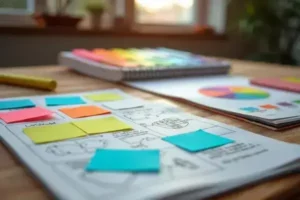

Picture this—you’re staring at your planner, books stacked on all sides, realizing you’ve got three big exams in the same week. Your heart races a little. How are you supposed to handle it all without completely melting down?
Trying to juggle multiple tests at once isn’t just overwhelming—it’s stressful in the way only students truly understand. If you try to cram everything the night before, your memory gets foggy, and honestly? Your grades and your sanity can both take a serious hit when you don’t have a plan.
By the time you finish reading, you’ll know exactly how to tackle how to study for multiple exams with sharper focus, smart strategies, and way less stress. Ready to make the chaos feel manageable? Let’s get you organized—starting now.
Understanding The Unique Challenge Of Preparing For Multiple Exams
Ever felt like your brain is juggling flaming torches while balancing on a tightrope? That’s what prepping for multiple exams can feel like. You’ve got overlapping deadlines, different formats, and subjects that require totally different thinking hats. It’s not just “more studying” — it’s a strategic balancing act with real stakes for your GPA, scholarships, and even your mental bandwidth.
Why is it so tough to handle several exams at once? Because each course demands a unique approach. Memorization-heavy subjects like biology drain your recall, while conceptual ones like math require logical problem-solving. Your mind has to shift gears — often in a single study session. And let’s be honest: energy is limited, even for the most organized student.
💡 Pro Tip: Research from the American Psychological Association shows that “interleaving” — mixing up topics while studying — can help your brain make connections and reduce burnout. Try intentionally alternating subject blocks rather than marathon-ing one class at a time.
Picture this scenario: Jamie is prepping for English Literature, Chemistry, and Calculus, all in the same week. She creates a color-coded tracking sheet, but halfway through day one, she realizes her attention keeps slipping every time she switches from poetry analysis to balancing equations. That’s not a sign of weakness — it’s cognitive load in action. And it’s why generic advice often falls flat when you’re under pressure.
| Challenge | Impact | Common Culprit |
|---|---|---|
| Overlapping Test Dates | Stress spikes, focus splinters | Poor time allocation |
| Subject Switching | Mental fatigue, reduced recall | Unplanned transitions |
| Resource Overload | Confusion, wasted energy | Too many study materials |
Here’s the thing: the key isn’t just “studying harder.” It’s learning how to manage that unique mix of demands so your performance — and your wellbeing — don’t fall off the tightrope. What actually works might surprise you…
Creating A Realistic Study Schedule That Actually Works
If you’ve ever blocked out six hours for “study time” and ended up doomscrolling halfway through, you know a study schedule isn’t just about setting hours. It’s about building a system that matches your brain, lifestyle, and deadlines. So, what does it take to actually create a study schedule that works—especially when you’ve got multiple exams in the same week?
- List Every Exam and Its Date: Write down each subject, exam format (essay, multiple choice, lab), and the exact date/time.
- Break Down Content into Manageable Chunks: Don’t leave it vague—specify chapters, topics, or problem sets. Smaller targets feel less overwhelming and help you track progress.
- Estimate Realistic Study Time: Be honest about your energy. Some subjects drain you faster. Work in 50-minute blocks with 10-minute breaks for deep focus (the Pomodoro Technique is a proven option, popularized by Francesco Cirillo).
- Prioritize High-Impact Tasks: Focus on areas that weigh heavily on your grade or that trouble you most. According to the College Board, targeted studying is far more effective than reviewing everything equally.
- Balance Subjects Across Days: Don’t ‘binge’ one class all day. Mixing subjects across study blocks helps your memory and prevents burnout.
- Build in Review and Buffer Days: Always add some catch-up time—things rarely go as planned.
- Calendar or planner (digital or paper)
- Color-coded markers or labels
- List of all assignments/exams
- Timer (phone, clock, or physical timer)
💡 Pro Tip: Use visual planning tools like the Eisenhower Matrix or time-blocking apps to separate urgent tasks from important ones and avoid last-minute stress. The Center for Academic Success at Louisiana State University recommends keeping the schedule visible above your desk.
In practice: Sarah’s finals once fell in three consecutive days—Physics, U.S. History, then Spanish. She built a schedule that alternated subjects by difficulty and energy level, setting mornings for her toughest material and afternoons for review. Did everything go perfectly? No—but she had enough buffer to adjust, and her stress levels didn’t spike at the finish line.
| Time of Day | Subject/Task | Energy Level Needed |
|---|---|---|
| 8:00 – 9:00 AM | Physics Practice Problems | High |
| 9:15 – 10:00 AM | U.S. History Reading | Moderate |
| 10:15 – 11:00 AM | Spanish Vocabulary | Low |
But there’s one detail most students completely overlook until it’s too late…
Balancing Subjects: Avoiding Burnout And Mental Overload
How do you keep your mind sharp when you’re bouncing between organic chemistry, world history, and statistics—often within the same day? The truth is, relentless subject hopping without a plan is a recipe for burnout and mental overload. No amount of caffeine or willpower can make up for stretching yourself too thin.
- Alternate disciplines with different cognitive demands—swap calculation-based study with reading-heavy review.
- Use theme-based study blocks, grouping related subjects to limit context-switching fatigue.
- Schedule your toughest subjects during your personal peak focus hours (for most, that’s mid-morning or early evening).
- Build in ‘reset’ breaks: a short walk, a snack, even two minutes of deep breathing to truly step away from your desk.
- Don’t be afraid to scale back—ignore the myth that you must “study more” to succeed. Quality always beats quantity.
💡 Pro Tip: According to the Learning Scientists, alternating study topics—a method called interleaving—not only maintains your engagement, but actually boosts your ability to apply concepts to new problems on exam day.
Picture this scenario: Alex tries to study four subjects in a single night, back-to-back, powering through pure willpower. By midnight, his brain is fried. But on nights when he alternates disciplines (math, English, science—each followed by a real snack or stretch break), he ends up remembering more the next day, and sleeps better, too. That’s not a coincidence—it’s cognitive science in action.
| Session Structure | Impact on Retention | Burnout Risk |
|---|---|---|
| Single Subject Marathons | Short-term gains, poor recall later | Very High |
| Alternating Subjects (Interleaving) | Improved long-term retention | Low |
| Passive Cramming (Reading Only) | Poor conceptual grasp | Moderate-High |
And this is exactly where most people make the most common mistake…
Smart Review Techniques For Last-Minute Retention
Ever face that all-too-familiar panic: the test is tomorrow and your mind suddenly feels like a blank slate? Instead of cramming randomly, there are focused review strategies that actually stick—no all-nighter required. The secret isn’t just memorizing; it’s how you retrieve and connect those facts under pressure.
- Active Recall: Quiz yourself on key concepts instead of passively rereading notes. Studies by the Association for Psychological Science show active retrieval trumps extra study time.
- Spaced Repetition: Break up review sessions into several short bursts, returning to tough material every few hours. This strengthens your memory—and it works even for last-minute prep.
- Elaborative Interrogation: Ask yourself, “Why does this fact matter?” Explaining ideas—even aloud—cements understanding, not just memorization.
- The Feynman Technique: Pretend you’re teaching a confused friend. If you stumble, that’s a clue to revisit shaky spots.
- Mnemonics & Storytelling: Make up vivid acronyms or silly connections for hard-to-remember lists. These neural “shortcuts” are proven tools, according to Harvard’s Learning Lab.
- Flashcards (physical or digital, like Anki)
- Blank sheet of paper for brain dumps
- Timer for focused review intervals
- Quiet, distraction-free workspace
💡 Pro Tip: Don’t overlook low-tech approaches. Write out everything you remember from memory—then compare and fill gaps. Research says this “brain dump” boosts last-minute retention more than any app or highlight marker.
In practice: Picture this scenario—a student named Marcus is hours from a biology exam. Instead of rereading the textbook, he spends 30 minutes quizzing himself with flashcards, then “teaches” the material to his dog (really)—and jots forgotten facts on a sticky note. Surprisingly, he recalls obscure terms that had never stuck the night before. What actually works might surprise you…
Staying Motivated When The Finish Line Feels Far Away
How do you keep pushing when you’re exhausted, your to-do list won’t shrink, and finals week seems endless? That low, nagging slump (it sneaks up under fluorescent dorm lights) derails even the smartest students. Motivation isn’t magic—it’s built from habits, mindset, and a few well-timed rewards.
- Break your big goals into mini-wins. After every chapter or practice exam, pause and acknowledge your progress—it’s fuel for your next step.
- Keep visual reminders of your “why” in sight: a post-it with your future goal, a tiny token that means something to you. It’s not cheesy; it’s science. According to the American Psychological Association, meaningful cues boost perseverance.
- Shake up your environment when stuck. Something as small as changing chairs or moving to natural light can revitalize focus.
- Build in honest downtime—true breaks where you don’t even look at your phone. Your mind needs time to reset so grit lasts the week.
💡 Pro Tip: Use the “implementation intention” strategy from Dr. Peter Gollwitzer’s research: set a specific plan for what you’ll do when you hit a wall (for example, “If I start to drift in hour two, I’ll take a 10-minute walk”). This approach is proven to double follow-through rates.
Picture this scenario: Maya hits midweek, feeling totally over it. She makes a game out of her last review session—three sets of flashcards, then a five-minute dance break, all tracked in her favorite study app leaderboard. By the end, her mood is up, her eyes are less glazed, and she actually remembers what she learned.
| Motivation Hack | How It Works | Best For |
|---|---|---|
| Mini-Challenges | Turns big projects into daily victories | Long exam weeks |
| Visual Reminders | Keeps your end goal front and center | Busy, distracted learners |
| Implementation Intentions | Provides a reset plan when fatigue hits | Anyone struggling to stay on track |
Once this is in place, the rest of the routine falls into place naturally.
Your Study Success Starts Here
If you take just one thing from this guide, let it be: creating a realistic plan is your best friend when it comes to how to study for multiple exams. Remember the big three—work smarter with time management, mix up your subjects to avoid burnout, and use active review to actually retain what matters.
Maybe before, exam week felt like an impossible mountain to climb. Now, you’ve got a clear path up—step by step, block by block, with motivation that lasts. Long nights and last-minute panic don’t have to be your norm. You can do this—even on your toughest weeks.
What’s your go-to trick for staying calm during multiple exams? Share it below! Your experience might help someone else power through their next big week.

Alex Jordan Bennett is a student success enthusiast and academic planning writer dedicated to helping college students stay organized, manage their time, and build the habits they need to thrive. With a passion for practical study systems, campus life guides, and career preparation tools, Alex built this blog to give every student the practical resources they need to succeed from freshman year through graduation and beyond.